


AI now shapes how many organizations build software and run operations, with AI technologies powering everything from customer-facing features to internal automation. That reach brings more scrutiny from regulators and customers, so you need a repeatable way to show that your AI systems follow the same rules as the rest of your environment.
AI compliance gives you that structure by connecting model behavior and data use to concrete controls auditors can review. In this article, we’ll show you what AI compliance looks like and outline practical steps to move from ad hoc checks to a consistent governance model.
What Is AI Compliance?
AI compliance is the structure that shows your AI systems play by the same rules as the rest of your operations. This structure brings policy decisions and technical controls together with everyday workflows, so AI models can handle data legally and stay within your risk tolerance thresholds. The result covers the full system lifecycle, from design and training through deployment and ongoing monitoring.
The goal of AI regulatory compliance is to manage risk without slowing down innovation or adoption. Teams should experiment within a clear framework that prioritizes AI privacy and security and creates a record you can share with auditors or regulators. A strong compliance program also clarifies who owns decisions about AI usage and which systems fall under its scope.
Why Does AI Compliance Matter?
AI now has the power to affect people’s jobs, access, and resources. Once you use AI models in industries like recruiting or lending, regulators treat them like any other system that processes personal data and automates decision making.
If something goes wrong, and you can’t show how the model was trained and what data was used, a single incident can quickly turn into an investigation. The stakes are high—under the General Data Protection Regulation (GDPR), for example, regulators can fine organizations up to 4% of global revenue, and the EU AI Act raised that ceiling to 7% for the most serious violations.
A strong compliant AI approach benefits your organization as well. It gives you a way to catch issues early, correct them with evidence, and show regulators and stakeholders that you treat AI with the same discipline as the rest of your critical systems.
Key Standards in AI Regulatory Compliance
AI compliance regulation can be complex—instead of one rulebook, you’ll work within privacy statutes and sector regulations for your area and industry, then layer AI-specific frameworks on top. Here are some important regulations to understand.
GDPR
The GDPR is the European Union’s core data protection law, and it sets the baseline for how you must collect and use personal data, including data inside AI systems. When you use AI for automated decisions with significant or sensitive effects, the GDPR expects a clear lawful basis for processing, puts tight limits on how much data you use, and requires records that support meaningful insight or human review when users exercise their rights.
EU AI Act
The EU Artificial Intelligence Act focuses on how AI behaves rather than the data it processes. This regulation groups systems into risk levels, and it places the heaviest obligations on high-risk uses, such as tools that influence hiring or access to essential services.
Those systems need documented risk assessments and strong controls on training data quality, as well as regular oversight from human operators to ensure that the model stays within set boundaries. This act also lays out transparency requirements for generative AI systems that interact with people.
HIPAA
The Health Insurance Portability and Accountability Act (HIPAA) defines how healthcare providers and their partners handle protected information, and those duties carry into AI workloads.
If you use AI models for clinical decision support or patient engagements, the same privacy and security rules apply to both the models and the surrounding systems, including vendors. So your AI compliance work has to cover contracts and access control instead of focusing on model logic.
United States AI Guidance and Sector Rules
Outside healthcare, U.S. organizations face a mix of federal guidance and sector laws rather than a single AI statute. The White House Blueprint for an AI Bill of Rights and recent executive actions sketch out expectations around safe systems and protection from algorithmic discrimination. Meanwhile, regulators in finance lean on long-standing rules such as the Fair Credit Reporting Act to judge AI-driven lending and credit decisions.
NIST and ISO/IEC AI Standards
Guidelines from NIST and ISO give you playbooks for managing AI risk. The NIST AI Risk Management Framework offers shared language for identifying and treating AI risks over time. And newer ISO/IEC standards describe how to build an AI management system that links AI governance decisions to everyday work across the model lifecycle.
How Can You Implement AI Compliance?
Here are a few core practices you can use to shape compliance decisions before and after an AI model goes live.
Establish Governance Frameworks
Start with a simple governance model that spells out who can approve AI use cases and what principles they must follow. Many teams extend their existing governance, risk, and compliance functions to include an AI or data risk committee, which reviews high-impact systems and records why they’re allowed.
Conduct Risk Assessments
Treat every significant AI system like a change to your control environment and run a risk assessment before launching. Map the use case to your regulations, then document likely failure modes, the controls you’ll use to mitigate them, and why you consider the remaining risk acceptable.
Monitor AI Systems Continuously
Once a model moves into production, treat it as a moving target. Set up monitoring for key inputs and outputs, watch for drift, and log any retraining or major configuration changes so you can trace issues back to specific events.
Strengthen Data Governance and Audit Trails
Strong AI compliance depends on clean data foundations and evidence of how systems behave over time. Tighten data governance so you can trace training and inference data to sources, and keep audit trails that show who changed models, when those changes happened, and which systems rely on the outputs.
What Are the Challenges of AI Compliance?
As you try to keep systems aligned with changing rules and fast-moving models, you may encounter these challenges:
- Regulatory uncertainty: AI rules keep evolving, and different regions publish guidance that doesn’t always line up. Your teams have to track those changes, then turn them into a single standard that all stakeholders can follow without constant re-interpretations.
- Data privacy and security: Most AI use cases lean on large datasets that often contain sensitive information. Understanding the role of AI in cybersecurity helps you build clear data lineage and strong access control, so new training or inference data doesn’t quietly push a previously compliant system over the line.
- Automated decision making: When AI influences high-stakes decisions about people’s livelihoods or access to essential services, regulators expect more than strong performance metrics. They look for clear accountability, transparency, explanations people can understand, and reliable paths to human review when needed.
How Can You Leverage AI for Regulatory Compliance?
AI tools can improve regulatory compliance when you treat them as part of your control environment, rather than as side experiments. AI governance platforms apply compliance automation and data analysis to track regulatory change management over time, and they tie those changes back to structured risk assessment for each significant AI system.
The same AI tooling can watch production activity for signs that a model drifts out of bounds. This technology also helps you assemble evidence for reports that give auditors traceable links between specific requirements and systems.
How Legit Supports AI Compliance
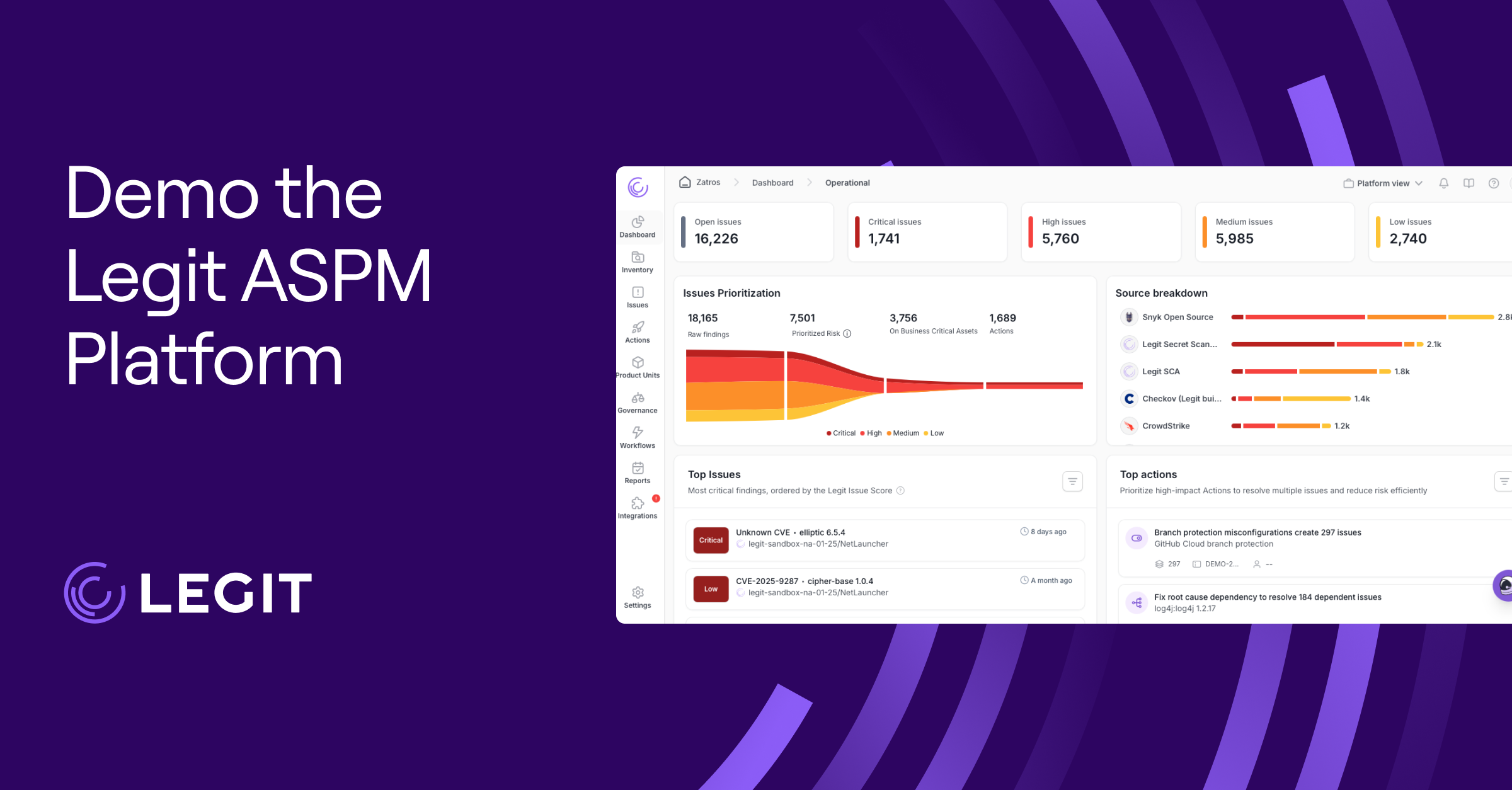
Legit’s AI application security posture management platform gives you a single place to connect AI compliance with the rest of your workflows. With Legit, you can bring software supply chain security together with continuous compliance workflows built around software bills of materials, then link that foundation to AI visibility across your teams.
By monitoring code repositories and delivery pipelines in one view, then layering in data about AI code and usage, Legit shows how AI-driven changes move through your software development lifecycle. Plus, it retains the context you’ll need to map those workflows back to regulatory expectations.
Request a demo today, and see how Legit Security connects AI workflows with your software supply chain.
Download our new whitepaper.