


Are you confident your AI projects create value, or could they be quietly expanding your attack surface and baking bias into critical decisions? As you incorporate AI technologies into more products and workflows, you’ll need a clear framework to help your team decide where AI belongs and how to keep its use aligned with security and ethical standards.
Artificial intelligence governance gives you a practical system for setting rules, assigning ownership, and measuring whether your AI behaves as intended. In this article, you’ll learn how to build an AI governance framework that lets you benefit from AI while avoiding many of its risks and challenges.
What Is AI Governance?
AI governance is the process of setting rules for how AI integrates into your organization. It involves bringing together policies and technical controls so you can manage AI systems across their lifecycles, from the data they ingest to how they behave in production.
The goal is straightforward: Your models should align with your legal obligations and values, with particular attention to how fairness, transparency, privacy, and accountability affect the decisions those models make. This approach to responsible AI keeps your systems operating within acceptable boundaries.
Strategic AI governance and compliance turns scattered experiments and applications into a global framework you can control. You get to define who can approve new AI use cases, how data is selected and documented, and what level of explainability you expect before a system goes live. You can also put repeatable checks around bias and model quality, so you can spot drift or misuse early instead of reacting after incidents.
Why Is AI Governance Important?
AI errors can appear unexpectedly and scale quickly. When you plug chatbots into customer support or policy pages, one wrong answer can repeat for hundreds of people before anyone notices the issue.
Air Canada encountered this problem when its website chatbot told a grieving passenger they could request a bereavement refund, even though the airline’s official policy said otherwise. A Canadian tribunal later ruled that the airline was responsible for what the AI chatbot said and ordered compensation for the passenger. That kind of misalignment turns simple content or configuration mistakes into legal and reputational headaches.
With strong AI governance, you can prevent or at least mitigate issues like this, instead of reacting to them after the fact. You get to define where AI sits in customer and internal workflows, and decide how your team validates outputs before making high-impact decisions.
Once you’ve set up clear ownership and ongoing monitoring backed by documented controls, you can answer regulatory questions and show customers that you treat AI decisions and user data with the same care you bring to any other critical system.
Core Principles of AI Governance
The core principles of ethical AI transform governance from policy into day-to-day guidance your team can act on. Here’s what should anchor your AI governance framework:
- Empathy and human impact: AI governance starts with ethical considerations - understanding how your systems affect real people. You should look beyond model performance and ask who might be harmed or excluded by AI-driven decisions, then adjust policies or workflows to reduce that impact.
- Fairness and bias control: AI systems learn from historical data, which often carries hidden biases. Governance means checking how your models treat different groups, by using algorithmic audits and metrics to spot skewed outcomes. Then you’ll adjust training data or logic to avoid disadvantaging or discriminating against certain users.
- Transparency and explainability: People need to understand why an AI system reached a decision, especially in high-stakes areas like fraud detection and access controls. Governance sets expectations for documentation that non-experts can follow, so you can walk stakeholders through how a model works and where its limits sit.
- Accountability and oversight: Governance assigns ownership for each system and defines when humans must review or override AI outputs. That way, when something goes wrong, you know who’s responsible for investigation and fixes.
- Privacy and security: Most AI systems rely on large volumes of data, which makes privacy and AI security non-negotiable. AI governance policies set rules for what data you can collect, how long you can keep it, who can access it, and how you can protect it from misuse or attack.
Key Challenges When Implementing AI Governance
Once you start applying AI governance to real projects, you’ll likely encounter challenges that require careful risk management, such as:
- Balancing innovation and control: Product and support teams often want to move quickly with AI projects, while risk and compliance lean toward slower, more structured rollouts. If governance locks every experiment behind heavy approvals, people may route around the requirements. If you relax controls too far, you can end up with shadow AI and inconsistent policies.
- Managing data privacy and security risk: Many AI systems thrive on large, varied datasets, including logs and support tickets that contain sensitive details. That makes data minimization rules and strict access control difficult. You have to decide how much data a model really needs, and how you will protect it from leakage or attacks using generative AI security measures.
- Clarifying accountability: When an AI system causes harm or amplifies bias, it’s not always clear who’s responsible for addressing the issue. Model builders, data owners, product leaders, and external vendors all play a role. Without clear lines of accountability and escalation, incidents bounce between teams, and leadership is unsure who can authorize changes or shut systems down.
How to Implement an Effective AI Governance Framework
To create an AI governance framework that supports your workflows and addresses the above challenges, you can follow these best practices.
Implement Strong Privacy and Security Standards
Whether you’re implementing AI in cybersecurity or customer-facing products, it’s important to treat AI systems as high-value assets and classify the data your models see. Set clear rules for personal and sensitive information, and apply security controls such as access control, logging, and AI SecOps practices. This helps protect against common AI security risks like data poisoning and prompt injection.
Integrate Your Framework With Existing Policies
AI governance should extend your current data, security, and risk policies instead of competing with them. Map AI use cases to existing standards for data handling and incident response, then add AI-specific checks where needed. This approach lets your team apply AI rules through workflows they already use, and provides visibility for internal and external audits.
Engage Stakeholders and Define Ownership
AI decisions can touch legal, compliance, security, data, and product teams, so governance should be just as all-encompassing. Consider setting up a cross-functional team to review high-impact AI use cases and make decisions when priorities clash. You can also assign an owner for each AI system, so there’s always someone accountable for approvals and ongoing oversight.
Stay Current on AI Regulations and Standards
Regulations around AI move fast—guidelines like the EU AI Act and NIST AI Risk Management Framework set new standards, and many industries layer their own requirements on top of those baselines. Track the laws and frameworks that apply to your markets, then translate them into concrete requirements for your team. After that, you’ll want to regularly review your AI portfolio for compliance, which keeps your framework updated and provides concrete evidence you can show to regulators and enterprise customers when they ask how you manage AI risk.
Support AI Governance With Legit Security
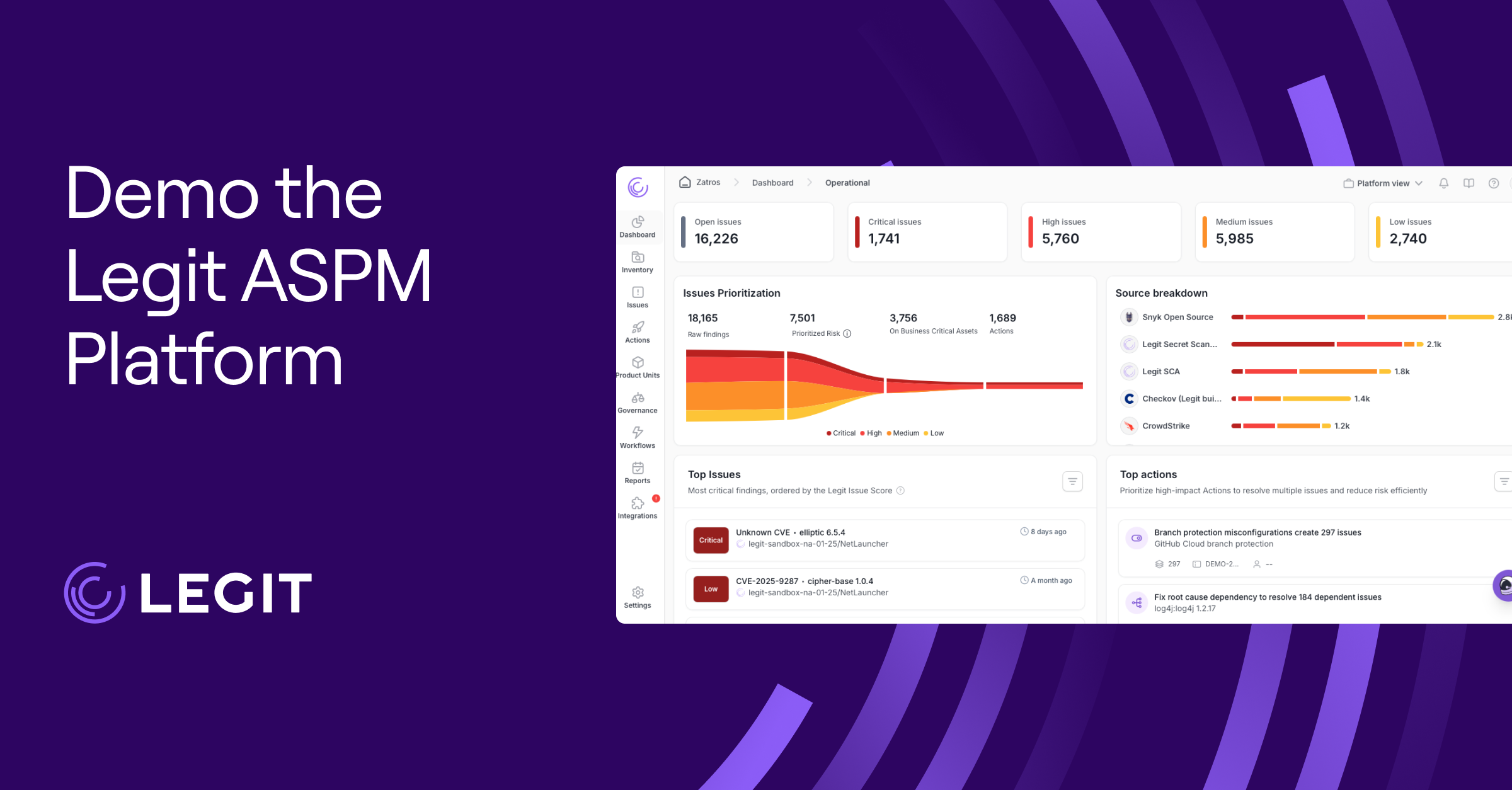
Legit Security’s AI security posture management shows you exactly where AI affects your software development lifecycle. You can see which repos and services rely on AI-assisted tooling, track how those tools handle code and data, and surface security policy violations as they appear. That visibility helps you make responsible decisions about which AI use cases fit your risk tolerance, and which need tighter controls or redesigns.
From there, you can turn AI governance decisions into concrete guardrails. Legit helps you enforce security and compliance policies across development pipelines, so AI-generated code and automation flows are checked against the same standards as your other tools.
Request a demo today, and see how Legit grounds your AI governance program in real lifecycle data and enforceable controls.
Download our new whitepaper.