

A Better Way To Secure GitHub/GitLab.
Legitify is an open-source security tool for GitHub or GitLab used to automatically discover insecure configurations.


Security where code is written.

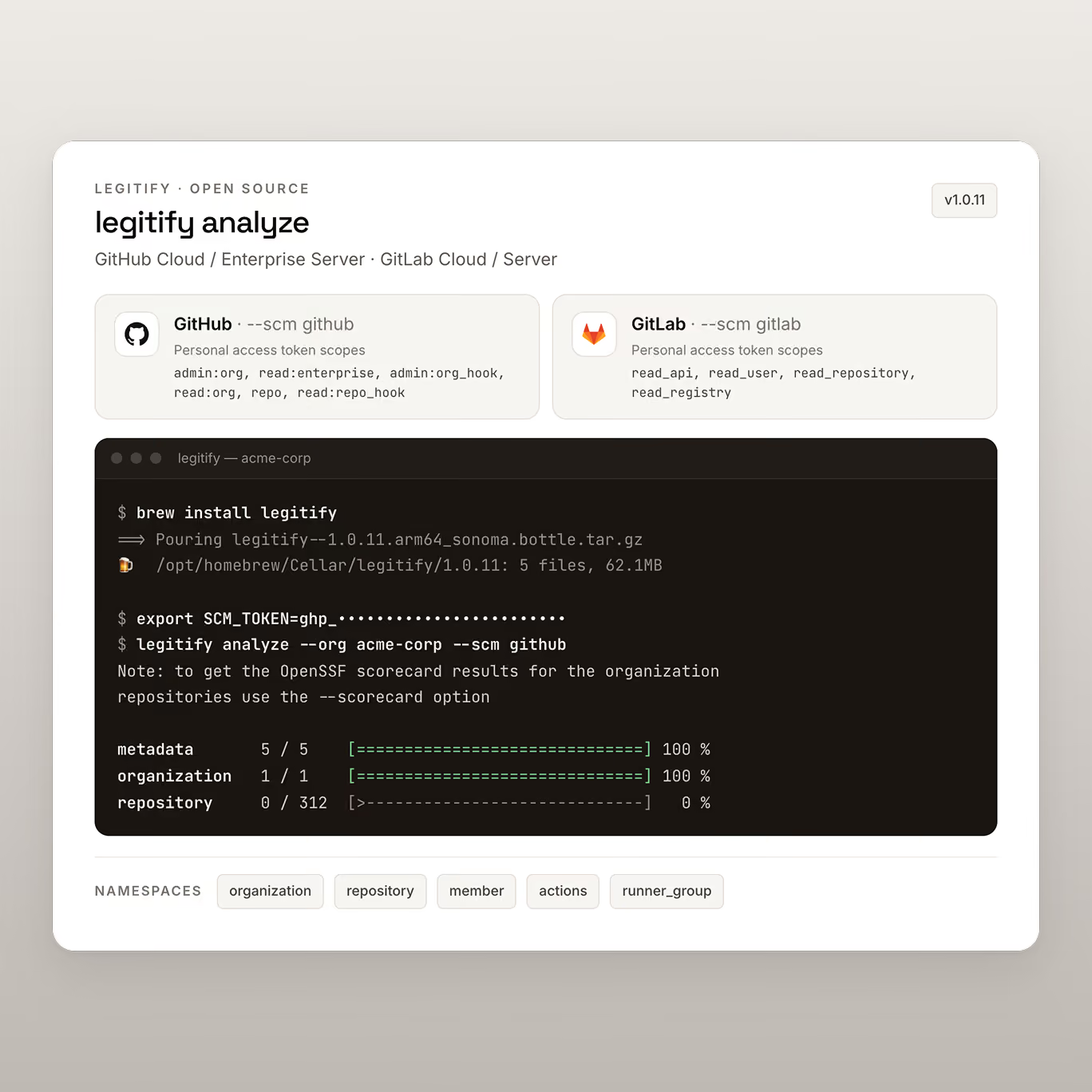
Connect Easily
Legitify connects to GitHub and GitLab via an access token and detects issues across various resource types: member, repository, actions, organization, and more. Legitify provides the option to scan by specific GitHub/GitLab instance and/or resource type, or to scan an entire GitHub organization, or GitLab group, across all resource types.

Scan Quickly
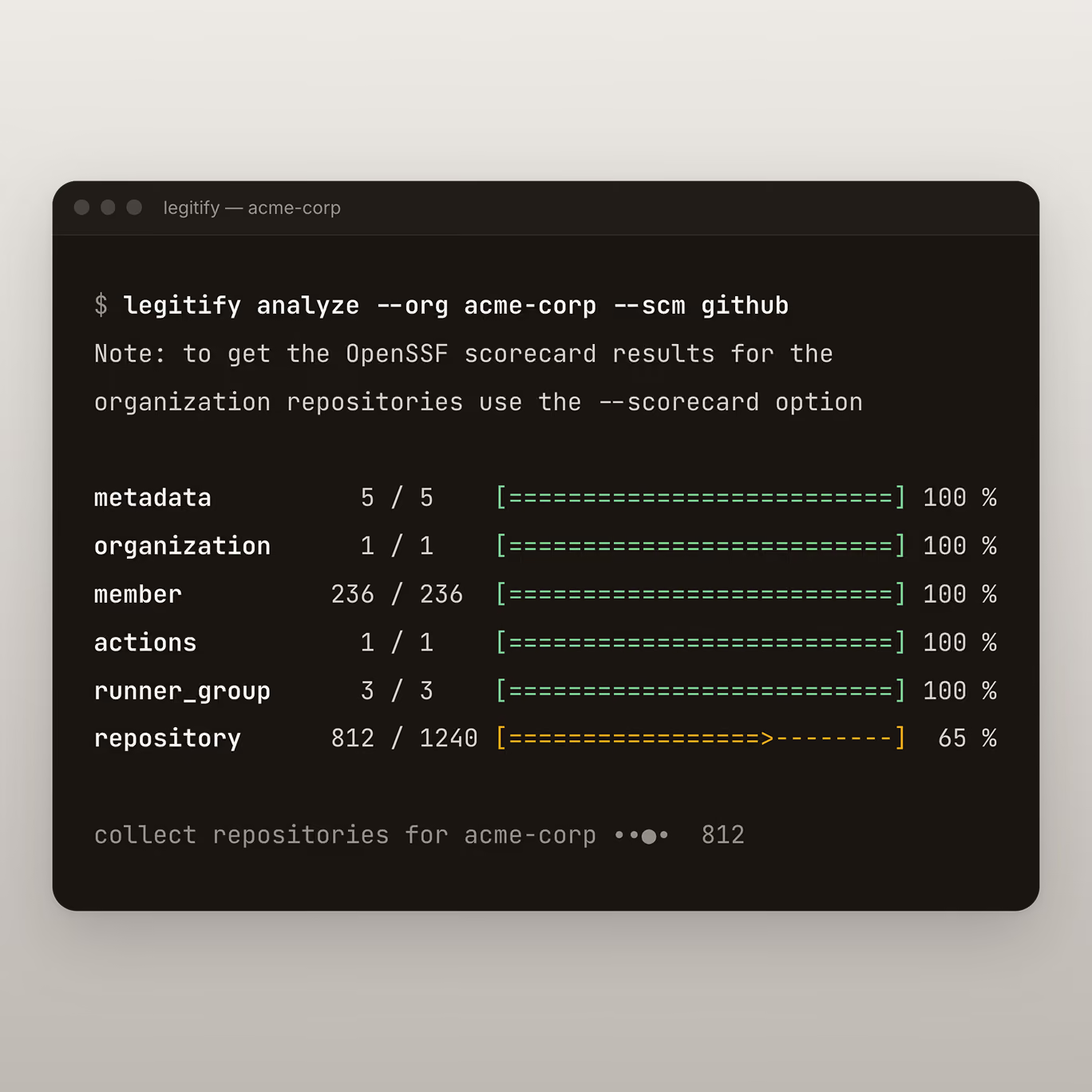
Legitify rapidly scans your GitHub implementations via the command line to detect a wide range of security issues associated with GitHub configurations and settings. Use Legitify across an entire GitHub organization of any size.

Detect Security Issues
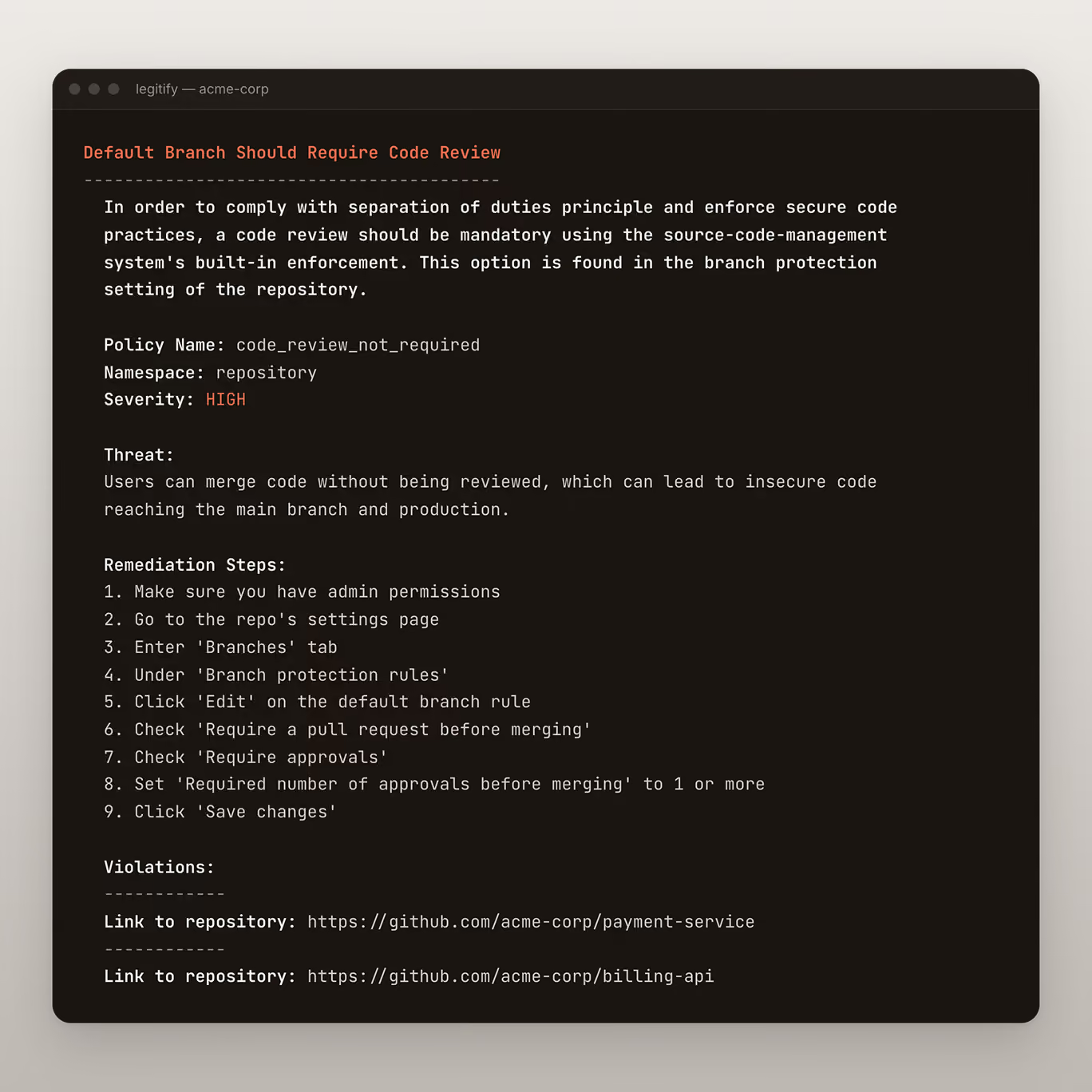
Any security issue detected is listed in the results, including the name of the issue with a brief description and severity categorization. Threat examples and remediation steps are also provided along with the entityID of the violation.

Obtain Security Scores
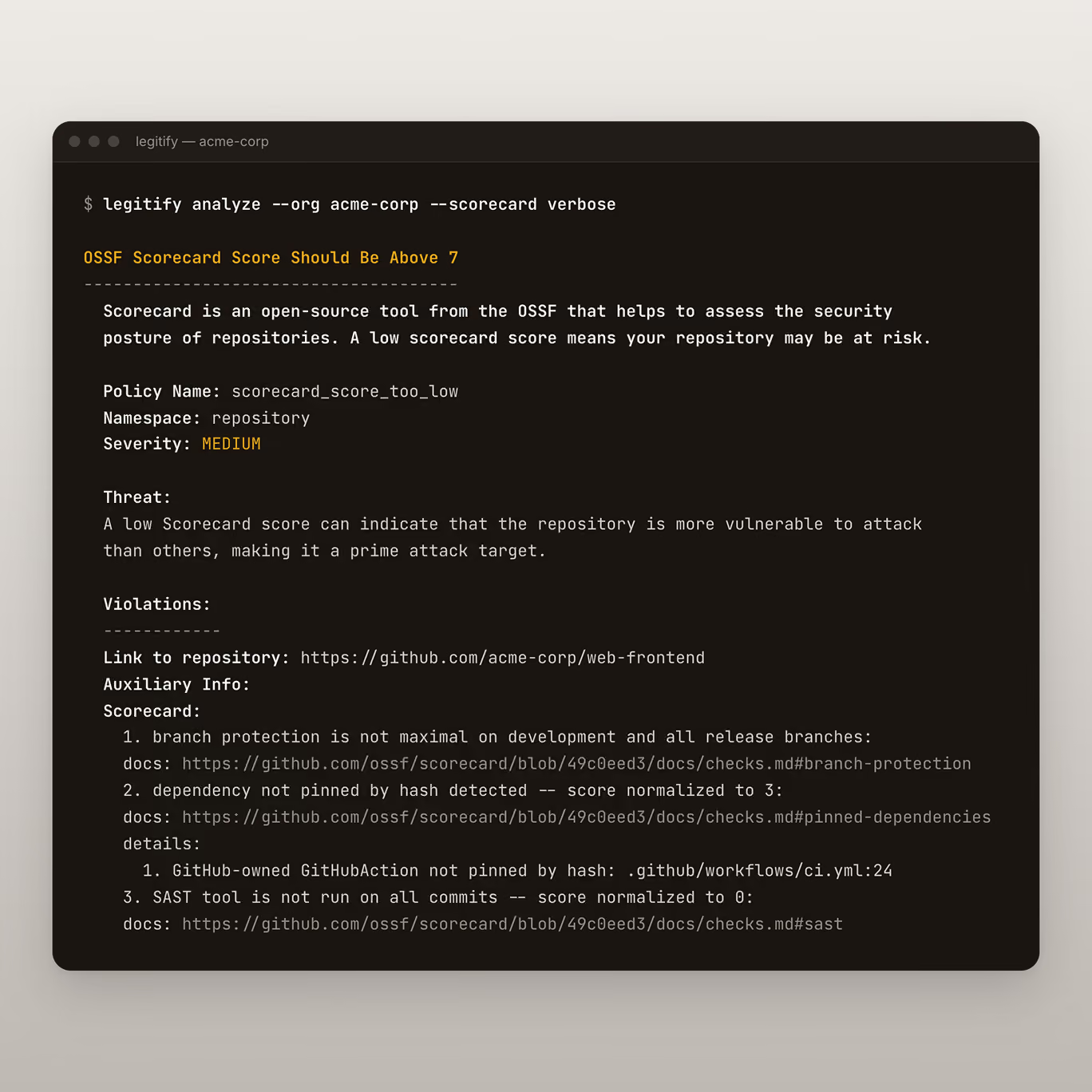
Legitify is integrated with OSSF Scorecard so you can run Scorecard within Legitify to assess the security posture of repositories using the Security Scorecard framework.
Legitify vs. the Legit Security platform
Legitify
Supports GitHub and GitLab
Detects SCM misconfigurations only
Compliance reporting for OSSF SCM Best Practices
Policy drifts detection can be detected periodically through Legitify's GitHub Action
SDLC assets management not supported
Issue & policy management not supported
Code to cloud context not supported
Workspaces and product groups not supported
Ticketing and alerting not supported
Risk ingestion not supported
Rest APIs not supported
Legit Security

Supports all major SCMs (incl. Azure DevOps, Bitbucket and more), CI/CD systems (e.g. Jenkins), package registries (e.g. JFrog Artifactory), cloud providers (e.g. AWS) and AI code assistants (e.g., Claude Code, Cursor, GitHub CoPilot)
Detects SCM misconfigurations, CI misconfigurations, CD misconfigurations, package registry misconfigurations, pipeline risks, secrets, IaC, security incidents, AI code issues, risky MCPs and skills, and more
Compliance reporting for SSDF, SLSA, SOC2, ISO 27001, FedRAMP and more
Policy drifts detection deliver real-time alerts when a misconfiguration is introduced
SDLC assets management supported
Issue & policy management supported
Code to cloud context supported
Workspaces and product groups supported
Ticketing and alerting supported via Jira, Slack and more
Risk ingestion supported via API integration with SAST, SCA and other AppSec testing tools
Rest APIs supported
How to Download and Documentation
Get the latest version of Legitify by downloading below and read through the documentation for an in-depth look at how our tool works.
FAQ