





Legit vs
OX Security
Evaluating ASPM platforms means understanding how different solutions approach application security management. Both Legit and OX Security serve security teams looking to manage risk across their development life cycle, but they do so in distinctly different ways.

What Makes Legit a Leading OX Security Alternative
Security leaders exploring alternatives to OX Security often look at Legit for its approach to securing AI-assisted development workflows.
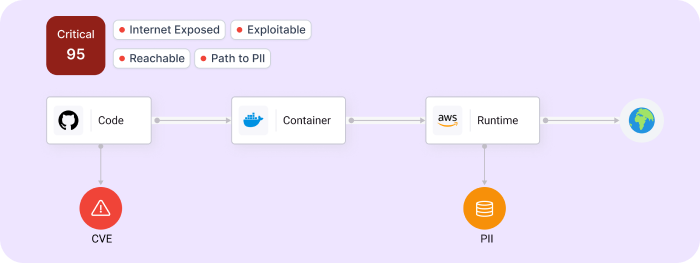
Built for AI-First Development
Legit's platform architecture was designed around the reality that AI tools like GitHub Copilot, Cursor and Claude Code are actively writing production code. The platform addresses AI-generated code security without creating bottlenecks that slow down development teams.
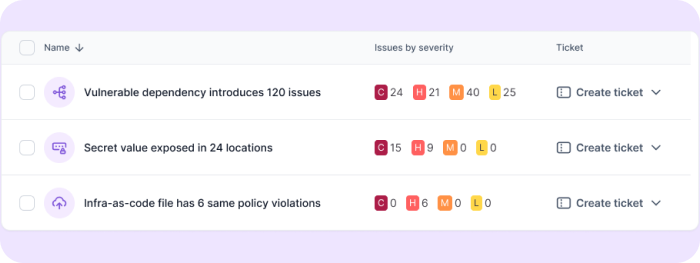
Risk Scoring With Business Context
Legit analyzes applications by considering factors such as business importance, public exposure, data sensitivity, API attack surface and AI tooling usage. This multidimensional view helps security teams understand actual risk exposure and make informed decisions about where to invest remediation efforts.
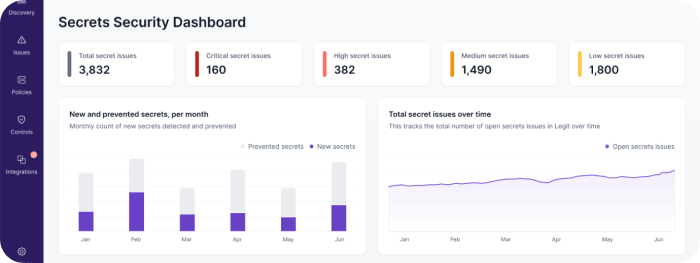
Fixing Root Causes
Rather than treating individual symptoms, Legit identifies underlying issues that result in multiple security findings. By focusing on root causes, teams can resolve numerous related problems with single fixes, making remediation more efficient and reducing the workload on development teams.

Security for the AI Era
Most application security tools were created before AI fundamentally changed software development. Legit built its capabilities specifically for environments where AI assists or generates significant code portions, with features for AI visibility, coding assistant governance and testing adapted to AI-powered workflows.
Related Resources
Announcing the 2025 State of Application Risk report
Report | State of Application Risk

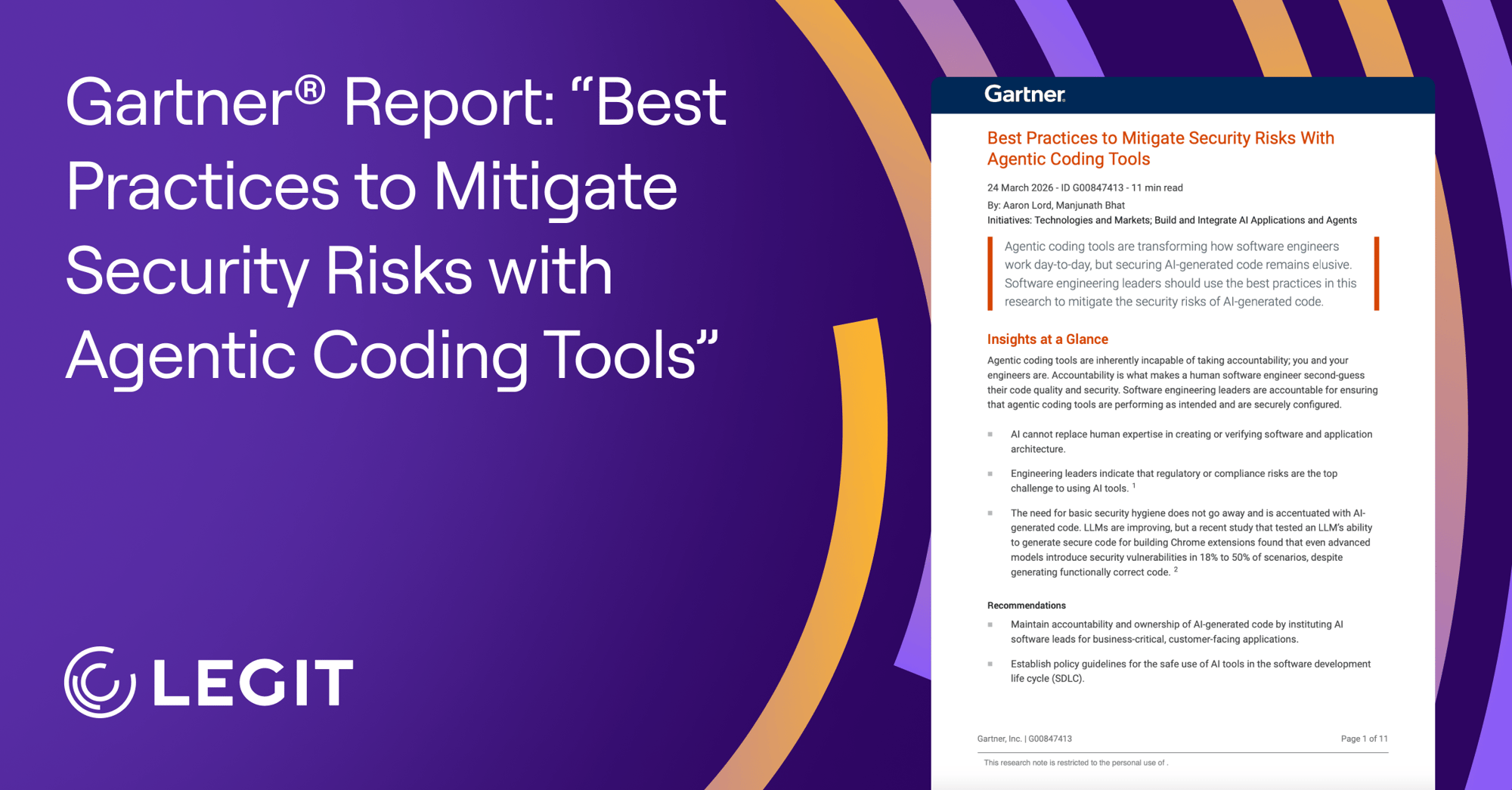
Gartner® Report: Best Practices to Mitigate Security Risks with Agentic Coding Tools
Gartner highlights the best practices for mitigating security risks with agentic coding tools.
Legit Platform Overview
A comprehensive platform to protect your most critical assets:applications and the software factories that produce them
See More

ASPM Platform You Can Trust
Legit is an ASPM platform that automates security issue discovery and prioritization. A trusted ASPM vendor option for your supply chain.

AI Discovery
Bridge the gap between security and dev by uncovering where and when AI code is used and take action to ensure proper security controls are in place - without slowing software delivery.
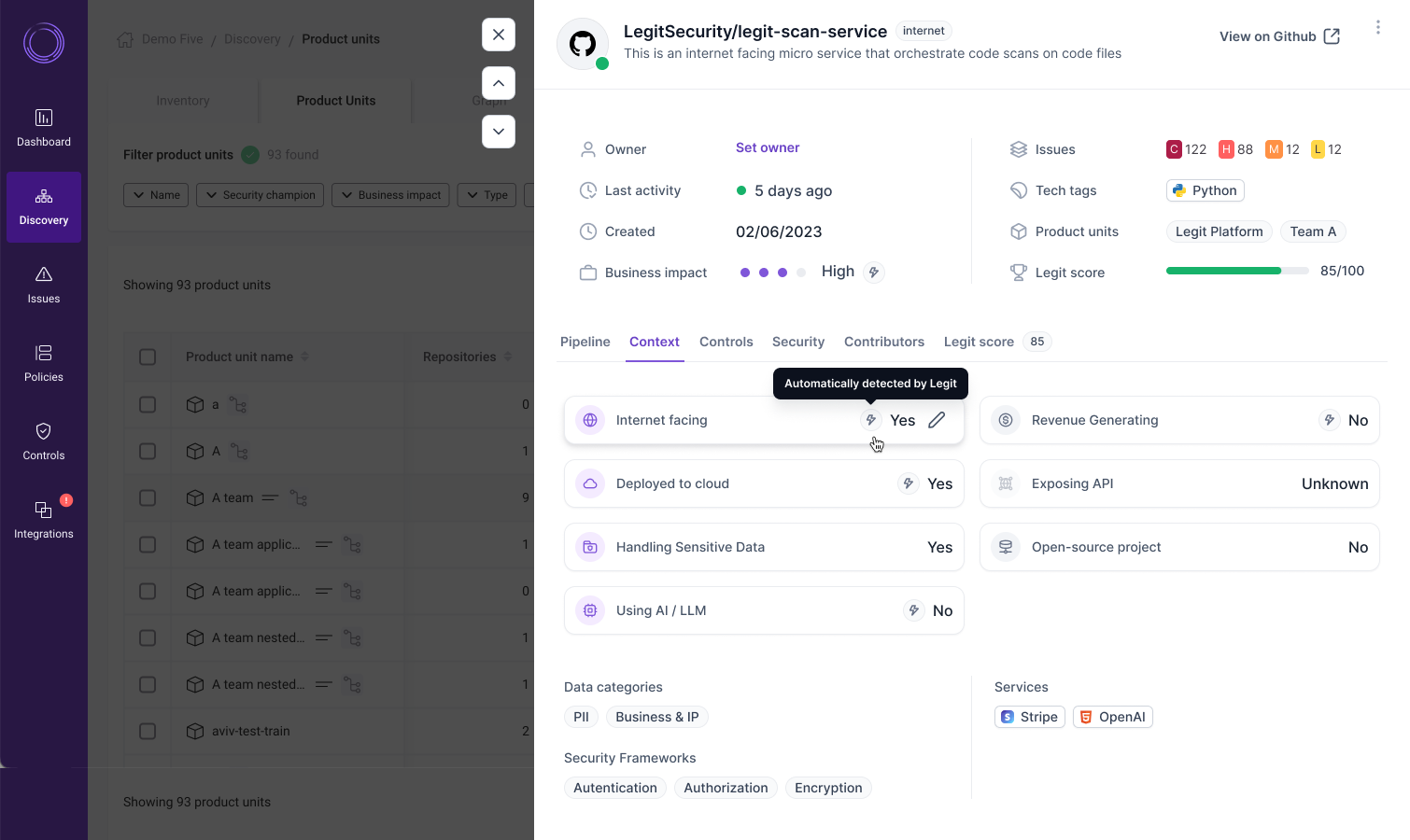
Announcing Legit Context: The Missing Link to True Business-Driven ASPM
Get details on Legit's new capabilities that allow AppSec teams to focus on the issues posing real risk.
Related Posts
-
 Read moreblogs
What Is Application Security Posture Management (ASPM)?
Strengthen your business with application security posture management (ASPM). Plus, explore how Legit Security’s AI-native ASPM safeguards your organization.
-
 Read Nowblogs
What Is AppSec? Application Security 101
Discover the fundamentals of what AppSec is, its importance, types of tools, and best practices to protect your applications from vulnerabilities.
-
 Read Nowblogs
Secrets Scanning: How It Works and Why It’s Important
Discover how secrets scanning protects sensitive data beyond source code, including documentation, developer tools, and artifacts.