
From detect to fixed, automatically.
Legit's remediation agents prioritize, fix, and validate SAST and SCA vulnerabilities across every affected service, closing the gap before attackers exploit it.




Finding was never the problem. Fixing is.
Every finding still runs through the same manual chain: a security engineer triages, a developer reconstructs lost context, writes a fix, and waits for review, one at a time.
Scanners produce findings around the clock. That chain runs at human speed, so the backlog always wins, and the riskiest issues age the longest because they're the hardest to fix.
A security-native remediation loop.
A generic coding agent has no security context, can't tell real risk from noise, and never proves a fix worked. Legit's agents run a different loop: enrich, prioritize, fix the root cause, and validate before anything merges.
Context

Prioritize
Every finding is enriched with reachability, ownership, deployment status, and business impact before an agent ever touches it.
Prioritize

Act
Reachability and exploitability scoring, plus org-wide false-positive memory, strip out the noise so only confirmed risk reaches the queue.
Fix & validate

Prevent
The agent fixes the root cause, opens a routed pull request, then re-scans to confirm the finding is closed with no regressions.
Everything security teams need to close the remediation gap.
Every finding enriched before an agent touches it.

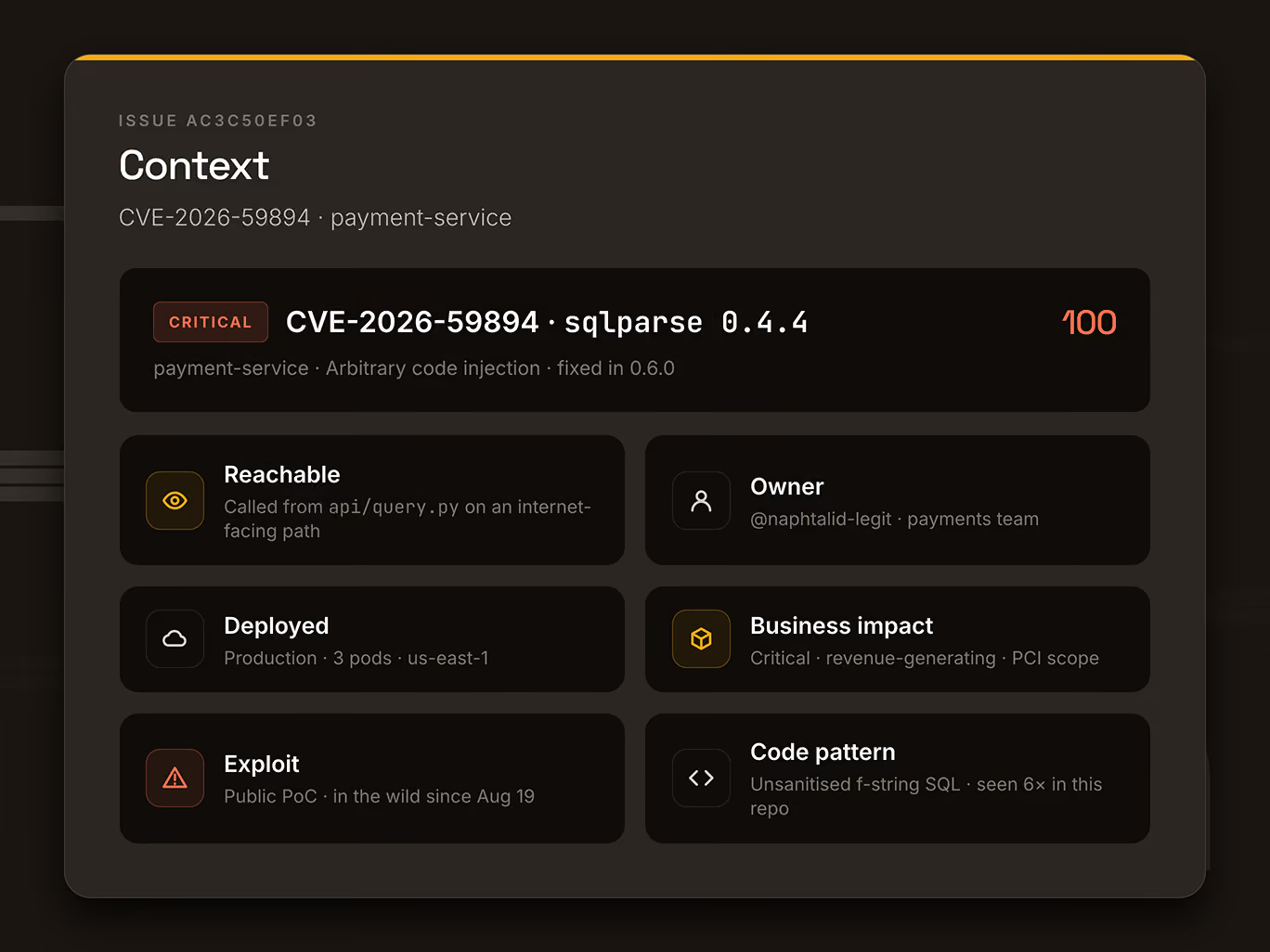
Only confirmed risk reaches the queue.
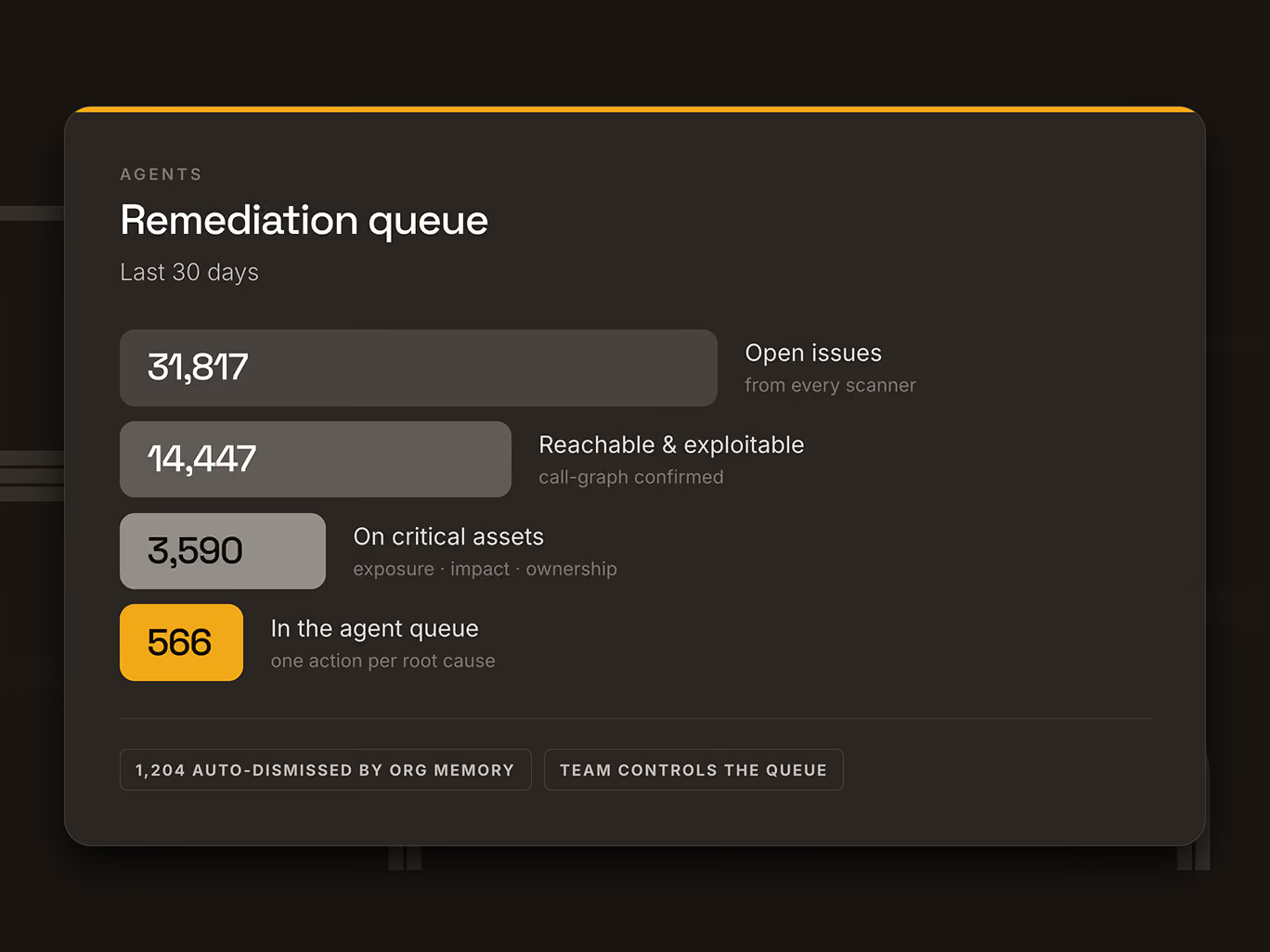
Root-cause fixes, not patches.
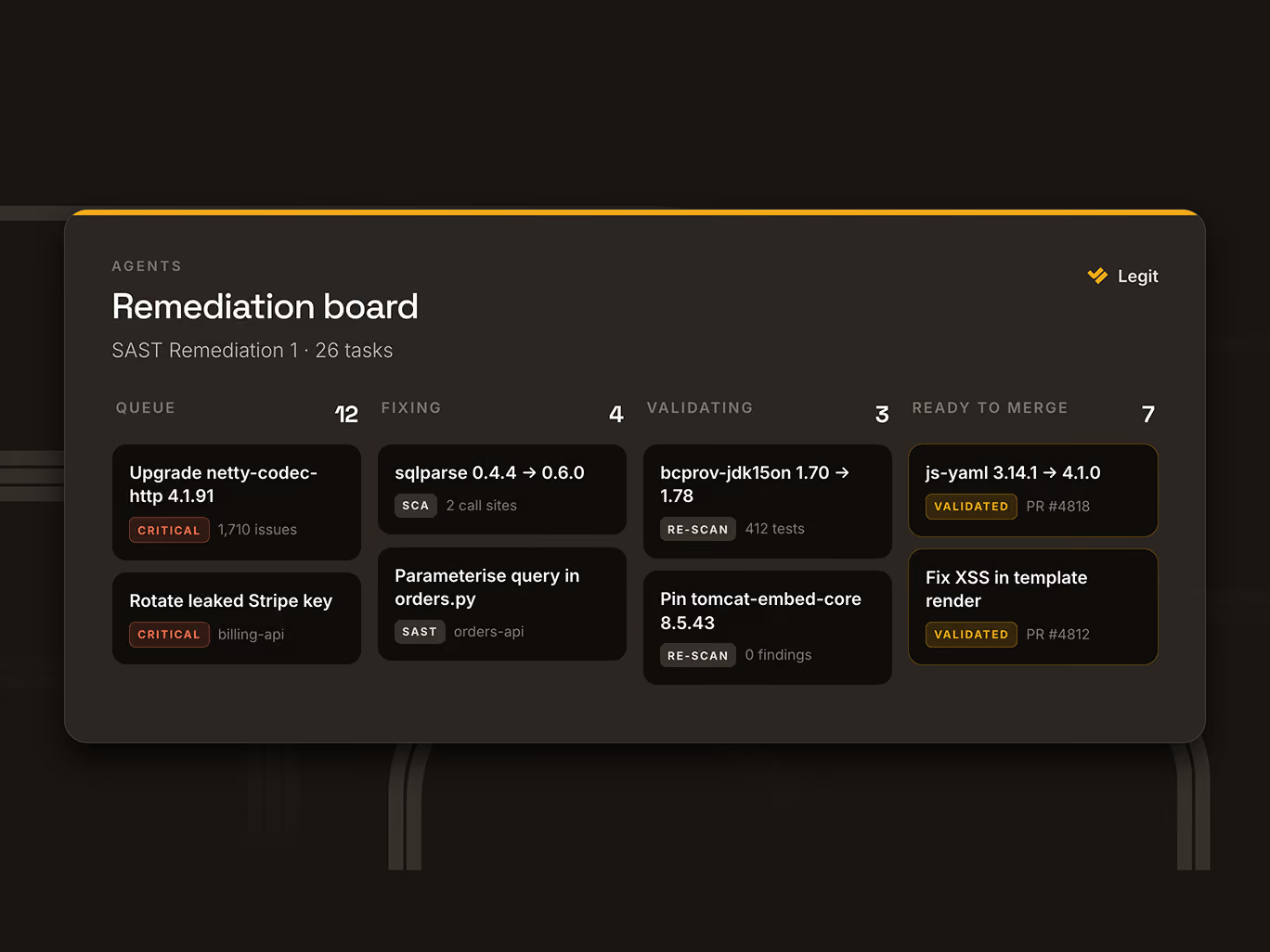
Nothing merges until it's proven.
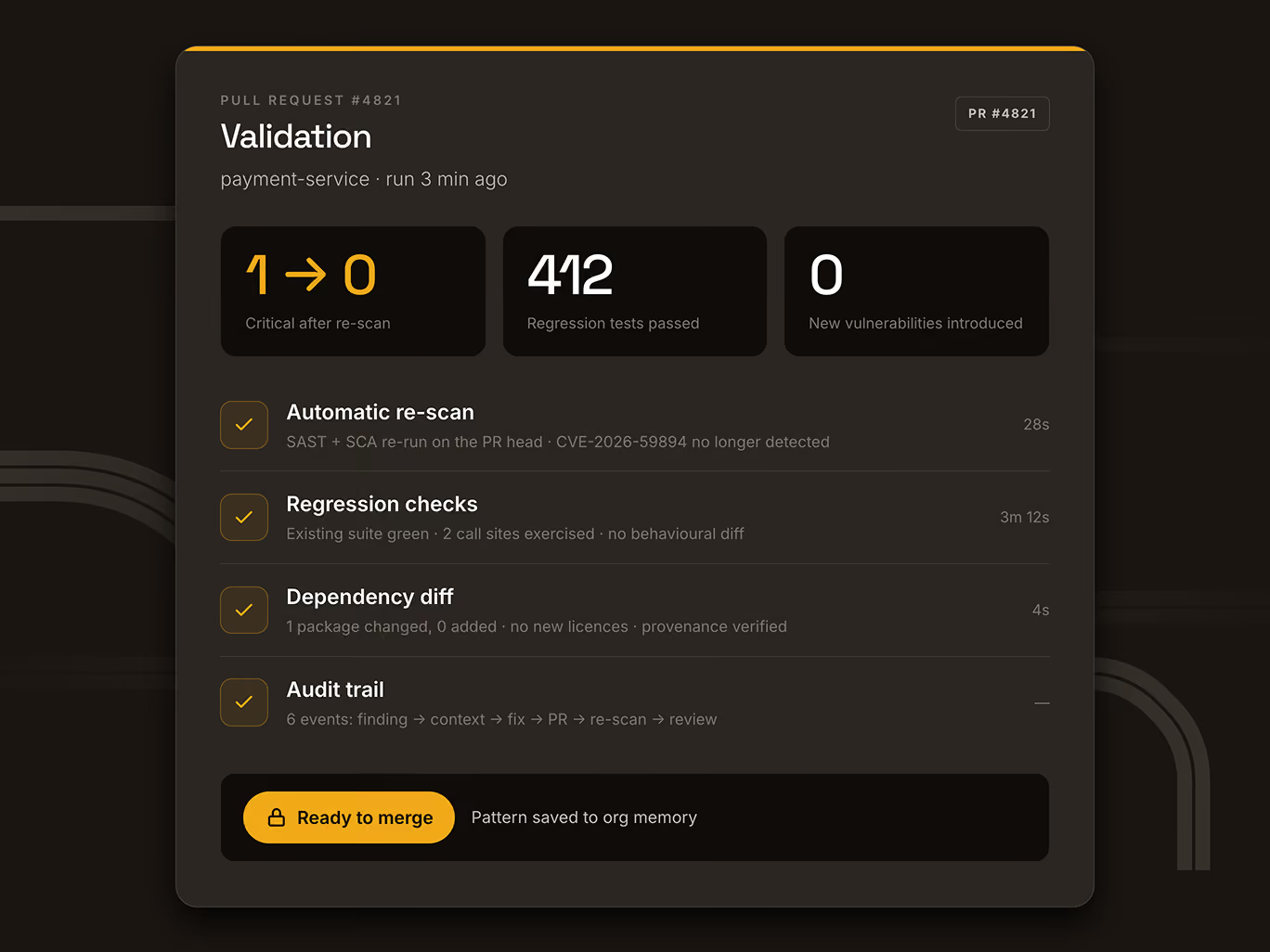
The math has changed.
AI-generated code carries 2.74x more vulnerabilities than human-written code, and the median time to remediate is 252 days, while attackers move from disclosure to exploit in minutes. Legit's agents close that gap by fixing the root cause everywhere it lives, in parallel, before it's exploited.