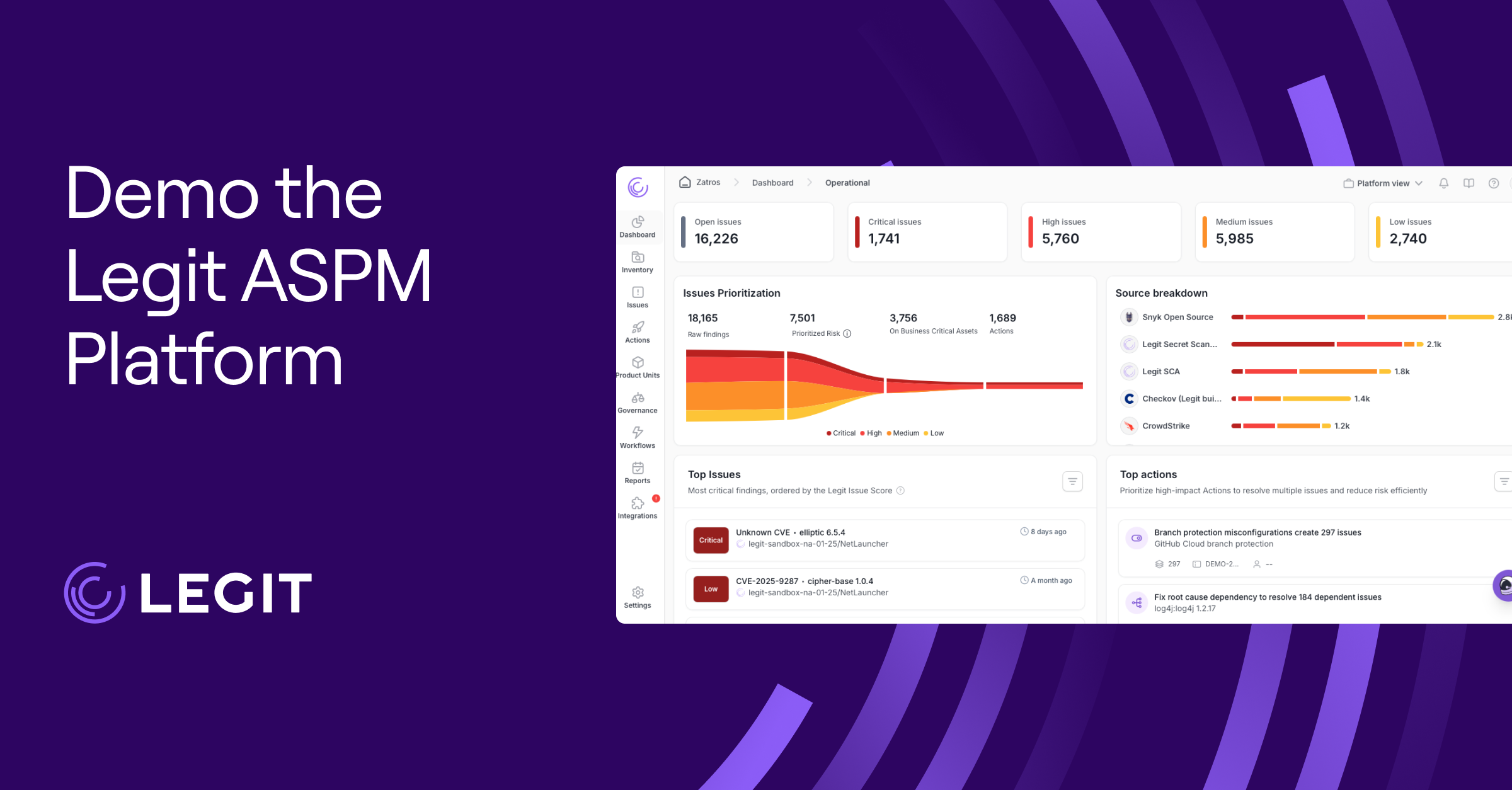



Large enterprises build software across multiple teams, with pipelines and tools constantly evolving. Open-source and cloud services add even more moving parts. With so much shifting at once, it’s hard to track how teams enforce security and maintain consistent standards.
Application security posture management (ASPM) brings that clarity back. It monitors how controls work across tools and teams and highlights where companies should focus their attention. You gain reliable insight to improve application security—without slowing development down. Let’s take a look at how it all works.
What’s ASPM and How Does it Work?
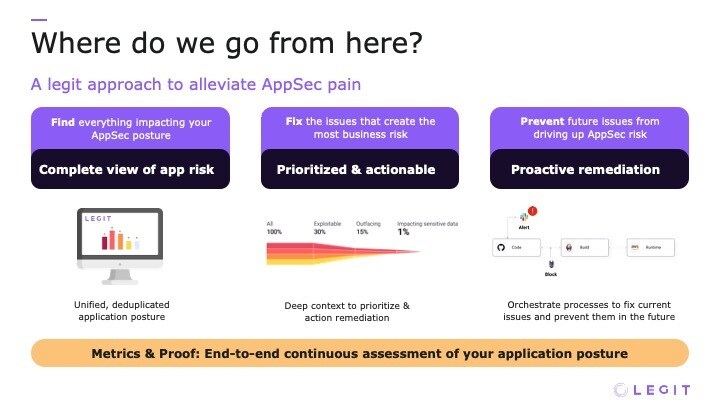
Leading ASPM vendors, like Legit Security, offer ASPM platforms that give teams a unified way to understand what’s happening across the entire software development lifecycle. Instead of chasing findings across different tools, ASPM connects the dots from development to deployment, highlighting the most critical risks and guiding teams on what to fix first. Key processes include the following.
Software Discovery and Inventory
ASPM solutions automatically find all your applications, components, and dependencies across your development environment. It maps changes as they happen, so your inventory stays up-to-date without manual work. This insight helps teams uncover blind spots, like forgotten microservices and outdated libraries, and keep portfolios under control.
Automation and Orchestration of Security Testing
ASPM works with tools like Dynamic Application Security Testing (DAST) and Static Application Security Testing (SAST) to run scans automatically, flag high-risk issues, and coordinate remediation workflows. By connecting results across different stages, ASPM highlights what really matters first, so your team isn’t drowning in alerts.
For example, if a vulnerability shows up in both a staging and production scan, ASPM can combine the findings and suggest the most urgent fix.
Why Do You Need ASPM?
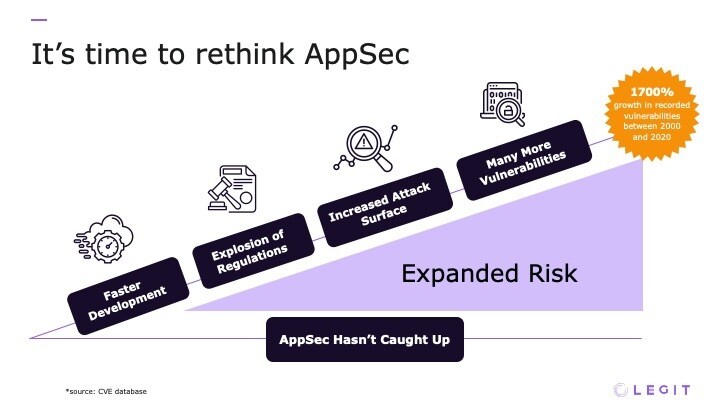
Modern software ecosystems are complex. Teams often operate across distributed groups and multiple programs, while security teams manage controls across front-end and back-end systems. Traditional tools only cover part of the stack, so teams often miss the full picture of their application security.
That’s where ASPM comes in. It gives a full view of visibility and risk across the board, helping teams act faster and more confidently to secure their software.
The Security Challenges of Modern Software Development
Visibility
Development workflows are always shifting. Because of this, teams often lack a consistent view of security controls across environments and teams. ASPM tools give leaders a complete picture of the software development infrastructure. It shows exactly where controls exist, how they operate, and where gaps appear. This helps teams catch any issues early and maintain standards across all systems.
Correlation
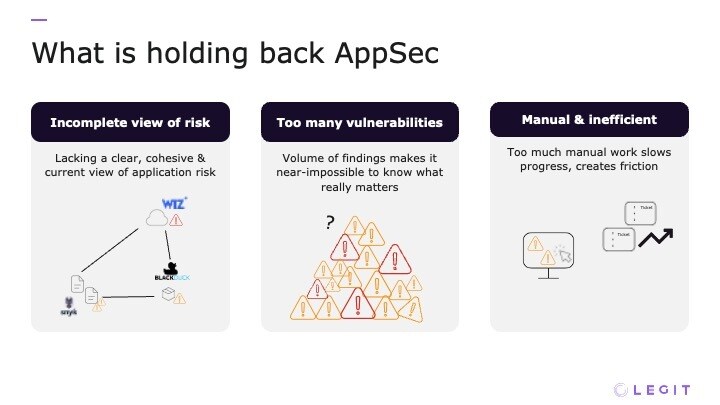
Security platforms create large volumes of alerts, often without context. ASPM takes findings from tools like SAST and Application Programming Interface (API) security, links related issues, and highlights patterns across different settings. It prioritizes vulnerabilities based on factors such as business impact and exploitability, letting teams target what truly matters instead of sifting through clutter.
Complexity
Modern software uses microservices, open-source libraries, and infrastructure as code. But manually handling security across these layers takes time and can lead to mistakes. ASPM platforms automate monitoring and coordinate across multiple tools, giving teams a centralized view of their security posture. Ultimately, this visibility makes it easier to uphold strong safeguards across large organizations.
What Are the Benefits of ASPM?
Implementing ASPM gives security teams the resources they need to manage risks more effectively across the software development lifecycle. Let’s take a closer look at those key benefits:
- Mitigate high-priority security vulnerabilities to reduce risk intelligently
- Uncover shadow IT, systems, and risks, including GenAI use
- Measure the blast radius of vulnerabilities—the potential impact of a security breach within a system
- Provide guardrails that allow developers to move fast without security controls slowing them down
- Streamline regulation compliance by proving where controls are deployed
- Evaluate application business criticality
- Provide a common language for executives, developers, and security teams to understand risks
How ASPM Compares Against Other Security Tools
Unlike standalone solutions, ASPM finds vulnerabilities and helps teams act efficiently. Here’s how it compares to other common security tools.
ASPM vs. Code Scanners
Code scanners, like SAST and DAST tools, focus on finding gaps in either specific areas of code or in application runtime. ASPM goes further by gathering those findings and matching them with other sources. This gives teams a complete view of where vulnerabilities may exist.
ASPM vs. ASOC (Application Security Orchestration and Correlation)
ASOC platforms oversee security testing across tools and bring all the results together in one place. ASPM adds even deeper context, like trend analysis and cross-tool correlation. These insights help teams assess risks and take action across more complicated development environments.
ASPM vs. CSPM (Cloud Security Posture Management)
CSPM tools center on securing cloud infrastructure, spotting misconfigurations, and enforcing compliance policies. ASPM complements CSPM by zeroing in on applications and merging findings from both development and cloud environments. This way, teams get a complete view of their security posture and know where to focus.
ASPM vs. CNAPP (Cloud-Native Application Protection Platform)
CNAPPs protect cloud-native applications by blending aspects of CSPM, workload protection, and container security. ASPM is a bit more integrated, correlating insights from CNAPPS and code scanners to give teams a holistic, actionable picture and help them respond proactively.
Key ASPM Capabilities
With ASPM, teams gain insight and can make informed decisions. Let’s take a look at some of the core capabilities:
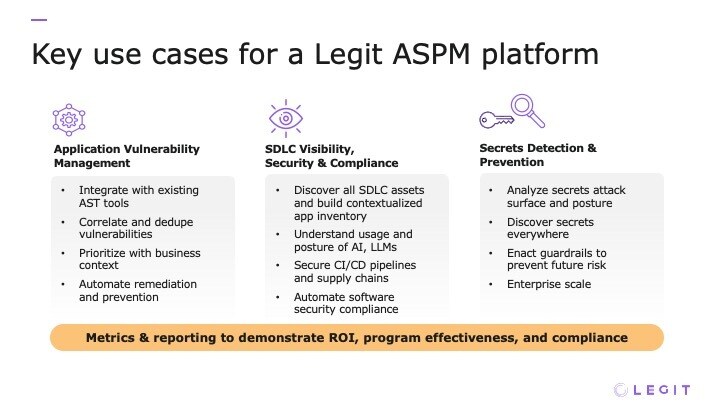
- Integration with third-party tools: ASPM integrates seamlessly with existing CI/CD pipelines, development tools, and security platforms to quickly identify how and where applications are being developed as well as security coverage gaps.
- Sensitive data identification: Many ASPM solutions also include secrets scanning, which detects exposed secrets across your development environment, reducing the risk of data breaches and unauthorized access.
- Risk-based scoring: By prioritizing vulnerabilities based on context and potential impact, ASPM helps teams address the most critical risks first.
- Compliance reporting: ASPM generates detailed reports tailored to various regulatory standards, making it easier to demonstrate compliance and pass audits.
- Real-time alerts: Continuous monitoring enables ASPM to provide instant notifications when risks or vulnerabilities are detected, allowing teams to respond quickly and mitigate potential damage.
- Root cause identification and remediation: With this capability, teams can trace the cause of a vulnerability (or vulnerabilities) to its source, allowing one action to address multiple findings.
Legit Security: The ASPM Platform You Can Trust
Keep your application security strong and fully visible for everyone. Legit Security monitors risks in real time, integrates with your development tools, and protects your software supply chain end-to-end.
Establish a scalable security program that safeguards your software and simplifies compliance across complex development environments. Book a demo today.
Application Security Posture Management FAQs
Who Primarily Uses ASPM?
ASPM benefits any organization that develops software, but it is especially suited for large, heavily regulated enterprises with sizable, dispersed development teams. Security teams and DevOps engineers use it to gain a unified view of security risks and streamline remediation efforts.
How Does ASPM Enhance DevSecOps Practices?
ASPM integrates with CI/CD pipelines, enabling automated security checks, risk scoring, and vulnerability remediation. Embedding security directly into development workflows reduces manual effort and prevents late-stage security issues.
Can ASPM Help With Compliance and Regulatory Requirements?
Yes. ASPM automates compliance tracking and reporting for GDPR and NIST frameworks, among others. It maps security controls to regulatory mandates, reducing audit complexity and ensuring continuous compliance.
How Does ASPM Impact the SDLC and Supply Chain Security?
ASPM provides end-to-end security visibility, covering application code, open-source dependencies, and infrastructure. It helps organizations detect and mitigate supply chain vulnerabilities before they become security incidents.
What Is the Purpose of an ASPM Platform?
The purpose of an ASPM platform is to give security and development teams a shared, real-time view of application risk from code to cloud. It unifies findings from fragmented security tools and maps them to business risk, so teams prioritize what matters most and take action faster.
ASPM integrates across the SDLC, pulling data from scanners, CI/CD pipelines, infrastructure, and cloud services. It then normalizes and enriches that data to create a single source of truth for security posture.
With that kind of visibility, teams can distinguish real threats from noise and understand which vulnerabilities could significantly impact the business. ASPM also strengthens collaboration between security, DevOps, and engineering teams by embedding guardrails directly into the tools developers already use. This shifts security left without slowing delivery.
Ultimately, ASPM transforms application security from a scattered set of tools into a coordinated, scalable program that’s built for speed and real-world risk reduction.